What this tool does
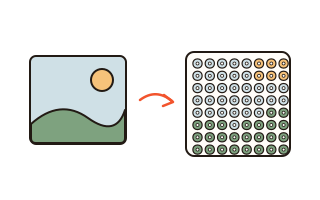
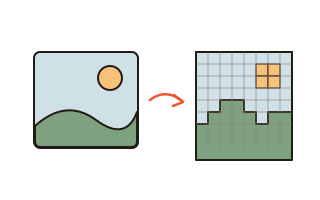
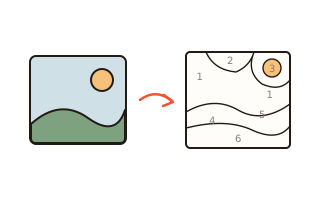
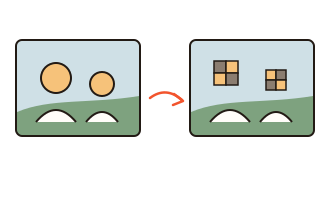
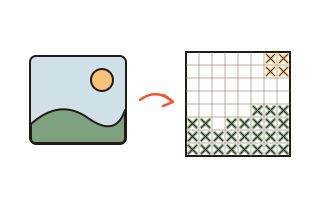
This tool turns a photo of a child, a pet or a drawing into a cross-stitch chart. Set the width anywhere from 10 to 300 stitches; the height follows the photo, and the colors are reduced to between 6 and 48 DMC thread colors, each with its own symbol and thread number. A bold line every ten squares, numbers along the edges and center marks help you start in the middle of the fabric.
Choose your fabric count (11, 14, 16 or 18) to see the finished size in centimeters and the fabric to cut with 5 cm to spare on every side. Add the number of strands and it estimates the skeins (8 m of six strands) each color needs. Colors with only a few stitches are merged into their nearest color and stray single stitches take the color around them, so there are fewer thread changes. Choosing a fabric also suggests the usual number of strands and needle size for it.
A chart bigger than one page is split across pages; the first page shows the whole picture, where each page goes, and the symbol key. Large squares (4.5 mm) make the symbols easier to read, and symbols-only prints cleanly on a black-and-white printer. Each color in the key has a box to tick off, and when a chart page has room to spare it also lists the colors and stitches on that page. Everything happens inside this browser.
How to use it
- Press "Choose photo" or drop a photo on the box, or try the sample picture first.
- Pick the stitches across and the number of colors. For faces, 80 stitches or more and 16 to 32 colors work well.
- Choose your fabric count and strands; the finished size and skein estimate update.
- Check the preview and the color list; touch up squares by hand if you like.
- Choose the square size (normal or large) and print style (color with symbols, or symbols only), then press Save chart PDF.
Stitches, fabric count and finished size
Aida is named by how many squares fit in one inch (2.54 cm). On 14-count, 80 stitches are about 14.5 cm wide; on 11-count, about 18.5 cm. A higher count makes the same chart smaller and finer; beginners usually find 11 or 14 count easier.
Cut the fabric about 5 cm larger on every side to leave room for a hoop or frame. The first page of the chart gives both the finished size and the fabric size.
The fabric count also suggests strands and needle: 3 strands and a size 22 tapestry needle on 11-count, 2 strands and size 24 on 14-count, 2 strands and size 26 on 16- and 18-count.
Thread numbers and the skein estimate
Each full cross puts two diagonals on the front and two square-side steps on the back. Adding a quarter for starting and finishing threads, the tool divides by one skein (8 m of six strands) to estimate the skeins per color. Stitchers vary, so treat it as a guide for what to buy.
Colors are chosen from a table of 454 DMC stranded cotton colors, and each is listed with its DMC number and name. The table holds screen colors the stitching community matched to real threads (MIT license), so a number means the nearest DMC thread to a screen color. Buy by number, and check it against a color card if you can.
With "Photo colors" the chart is not tied to thread colors and stays closer to the photo; each color then shows its nearest DMC number, as in "≈ 310".
DMC is a trademark of its owner. This site is not connected with DMC and uses the name only to say which threads the numbers refer to.
Large squares and black-and-white printing
Normal squares are 3 mm and large squares 4.5 mm. Large squares mean more pages but symbols you can read without a magnifier. However many pages the chart takes, row and column numbers run across the whole chart, and a small map at the top of each page shows where it belongs.
Color with symbols shades each square under its symbol for an easy overview; symbols only saves ink and stays crisp on a black-and-white printer.
Your data
Your photo is read and converted inside this browser and is never sent anywhere. Only your settings are remembered in this browser.
Questions and answers
Does it give DMC thread numbers?
Yes. The color list and the PDF give each color's nearest DMC thread number and name, its stitches and the skeins to buy. The numbers are matched by screen color, so check them against a color card.
The chart has several pages. How do they fit together?
On the first page, dashed lines over the picture show the page cuts and the numbers are page numbers. The small map on each page and the row and column numbers along the edges line up with the neighboring pages.
How much thread do I need?
The skeins column estimates the skeins each color needs. It changes when you change the fabric count or strands.
Is my photo uploaded?
No. Reading the photo and making the chart and PDF all happen inside your browser.